A Legacy of Longevity
In 1990, DAPY created the first rigid acrylic case for Dior: reusable, transparent, technically complex, and built to last. The brief was permanence, not disposability — and durable, reusable objects were simply how we worked, long before sustainability became the industry's defining subject.
That instinct has never left. An object engineered to be kept is an object that doesn't need to be replaced.
Sustainable by design
Sustainability at DAPY is not a recent initiative. It is the continuation of a philosophy as old as the company — designing durable, reusable, intelligently engineered objects that are built to last. What has grown is the scope: today that thinking runs from the material an object starts as through to its end of life, once it has left the floor.
Responsibility, engineered in
It starts with design
The decisions that matter most are made first. Function, material, longevity and end of life are resolved on the drawing board — where an object's entire footprint is determined, and where it can be reduced. How a piece comes apart is decided at the same moment as how it goes together.
Responsible materials
Premium recycled and bio-sourced grades from responsible suppliers, assessed as first options rather than substitutes. Recyclable and compostable protection. A biodegradable-additive technology developed with specialists. Each is held to the same optical, tactile and structural standard as everything else we make — a responsible material earns its place on merit, or not at all.
Cleaner production
We are a producer, not a trader. Mastering materials, tooling and prototyping in-house means waste is engineered out before the first run rather than managed after it — fewer reworks, less scrap, less energy. Augmented-reality prototyping validates shape, scale and finish without a single physical sample being made.
Circular thinking, down to the last mile
Responsible design doesn't end when the object is finished. Shipping cartons, container and pallet loading are resolved as a design problem rather than a logistics one, and we advise clients on product dimensions with the same aim. Less transported volume means a lower carbon impact on every shipment.
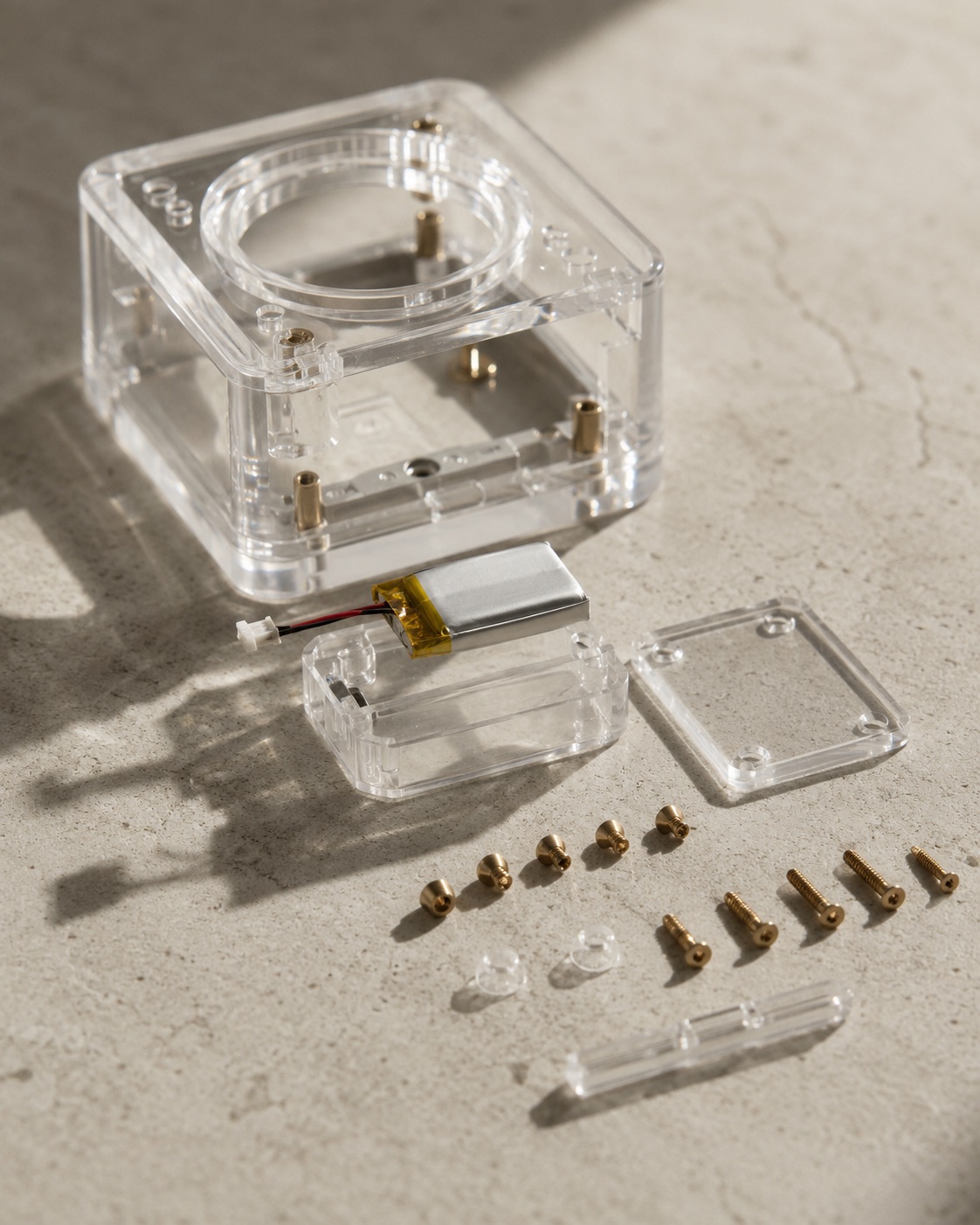
The same discipline applies at the other end of an object's life. Components are engineered to separate, battery-powered systems are rechargeable and simple to disassemble, and protection is chosen to be recycled or composted rather than discarded. An object that can be taken apart is an object that can be repaired, reused or recovered.
It is the same long-standing reflex applied to the whole life of a piece — and to circular-economy initiatives shared across our partner network.
Create better, last longer, and make beauty meaningful.
For DAPY, luxury and responsibility have never been in tension. The discipline that makes an object desirable is the same one that makes it endure — and value that lasts is the most sustainable value of all.